Understanding the Mechanics of the Game Underlying Cash or Crash Live
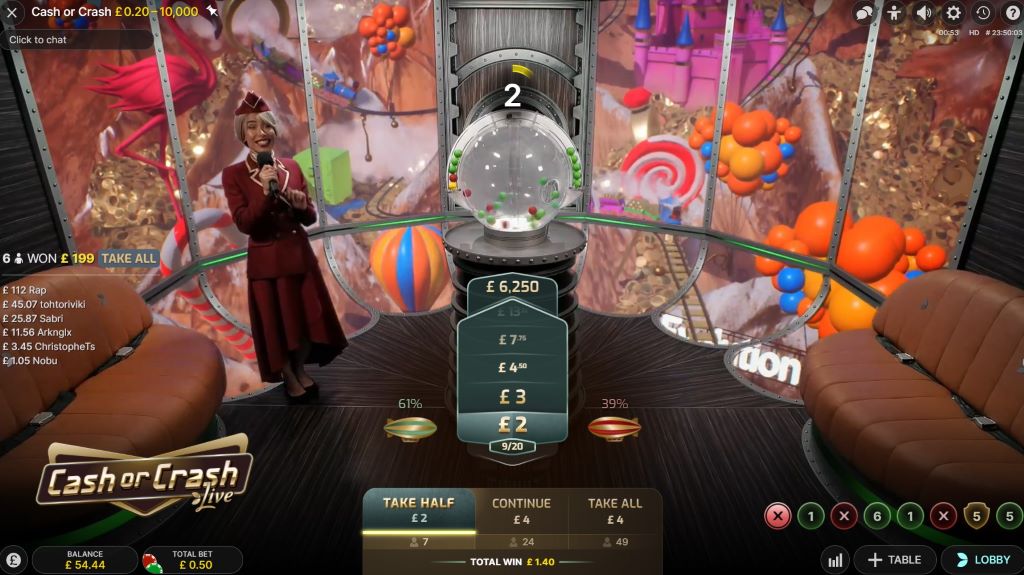
The game Cash Or Crash Live User Reviews carves out its own territory in the live game show world. Its appeal resides in a strong combination of studio spectacle and game design that turns every round into a personal test of nerve. This is no a passive spin of a wheel of chance. Here, you are in the pilot’s seat, making decisions that influence your payout. The premise hooks you with a rising multiplier, then challenges you to take it before a hidden “crash” wipes the slate clean. To fully benefit from the game, you must ignore the glitz and see how it actually works. Let’s examine the phases, the presenter’s part, the odds involved, and the strategies players can use to manage the excitement.
The Core Objective and Basic Flow
The aim of Cash or Crash Live is easy on the outside. You must determine when to cash out a growing multiplier before a hidden “crash point” ends the turn and removes your earnings for that phase. Every game starts with players putting bets. A rocket then begins its ascent, and a multiplier commences increasing from 1x. The ride has multiple phases. Prior to launch, a hidden crash multiplier is set for every stage, concealed from all players. As the number rises, each player decides to hit “Cash Out,” fixing that multiplier on their bet, or to continue. If the rocket hits the secret crash point before a player withdraws, they surrender their wager for that round. This cycle of risk and reward occurs over multiple stages. Players who survive grow their profits step by step.
Deconstructing the Game Stages
Think of the game as a collection of separate chapters, each a fresh gamble. Staying alive doesn’t remove you from the game. You proceed to the next stage with your accumulated winnings secure, then commence the risk process all over again on the next segment of the rocket’s flight. This structure is critical. It builds a drama, with suspense that intensifies as you progress. The host heightens the drama, revealing how many players are still riding the rocket as the multiplier achieves scary levels. Early stages often see cautious plays. Subsequent phases, with their big-winning multipliers, lure you to gamble the winnings you’ve previously won. This structure is the heart of the game’s excitement. It demands a sequence of individual, critical decisions instead of a single one.
From Low to High Risk: The Increasing Danger
Pay attention to the colored trajectory the rocket follows. It’s a core part of the game’s visual lexicon. The first part is typically a “Green Zone,” a less dangerous phase where a crash is still a possibility. Then, the rocket may enter an “Amber Zone,” a obvious indication that risk is rising. The final stretch is the “Red Zone.” At this point, multipliers look their best, but the chance of a crash is mathematically at its peak. Such visual cues are more than cosmetics. They provide a immediate indicator for the risk level at any moment. They make an intangible probability become tangible. Realizing the game is deliberately informing you about increasing uncertainty is a key piece of game strategy.
The purpose of the presenter and RNG
The on-air host goes beyond talk. They establish the game’s emotional pace. While they can’t affect the result, they expertly build suspense. They announce the climbing multiplier and give live updates on what percentage of the crowd is cashing out at each level. That social cue can play tricks on your head. But remember, the host operates independently of the game’s engine: the Random Number Generator (RNG). The crash point for each stage is set by a certified RNG the instant the stage begins. This ensures fairness and total unpredictability. The host has no clue when the crash will happen. Their job is entertainment. The RNG’s job is certifiable fairness. This combination blends transparent live action with provably random results.
Strategic Frameworks and Player Psychology
No tactic can defeat the core randomness. But you can apply systematic techniques to handle your bankroll and your feelings. The central dilemma is a exchange. Do you guarantee assured gains, or aim for explosive profits? Players often adopt techniques like the “Fixed Cash-Out.” With this approach, you determine ahead of time to withdraw at a certain multiplier, say 2x, in every stage. This targets stable, small wins. The opposite is the “Let It Ride” method, where you wager many phases for a chance at a massive win, recognizing that crashes will take place. A more calculated tactic is the “Percentage Bankroll” method, where you modify your stake based on your present profits. The key aspect, though, is in your head. Can you resist the “greed factor” when the multiplier rises? Can you escape annoyance after an premature loss? Your best weapon is setting clear boundaries for yourself before the rocket even begins.
Frequent Errors to Avoid
Be wary of a few common errors. The most damaging is “chasing” a crash. This means rashly boosting your bet after a loss, which violates the system’s phase-independent structure. Another mistake is trusting the “hot hand” misconception, believing a run of large ratios is probable to continue. Letting the presenter’s talk or the behavior of other players pull you away from your own pre-set plan is common. Also, do not misunderstand the areas. The Amber and Red Zones are not obstacles to overcome. They are signals that the danger has spiked. Starting any round without a specific aim transforms the game from a process of judgment into a complete emotional journey. That journey rarely ends well.
Theoretical Underpinnings and Variance
Let’s look at the figures that drive the game. The crash multiplier for every round is derived from a defined probability distribution. Frequent, small multipliers like 1.2x or 1.5x have a high probability of being chosen. Very large multipliers are achievable, but they are exponentially less likely. This system maintains the game balanced. The regular, small crashes finance the rare, huge potential payouts. The RTP figure is a statistical percentage across millions of rounds. In a single gaming session, the variance are wild. You aren’t betting against the house in a standard manner. You’re making choices against a hidden, random number. Keep these key facts in mind:
- Isolated Stages: Each level’s crash value is a separate event. A crash of 1.2x in round one gives no info about round two.
- No Predictive Patterns: The RNG rules out any predictable sequences. Previous crashes or large wins do not affect future rounds.
- House Advantage: The game is designed with an inherent house edge, as reflected in the publicly stated RTP from the developer.
Conclusion: A Blend of Chance and Decision
Cash or Crash Live is a fascinating blend of sheer fortune and conscious choice. Its workings are designed to weave a tale of rising stakes, driven by a transparent RNG and brought to life by a charismatic host. Determining winning as a entertaining and possibly profitable round relies on several factors. It’s less about forecasting the unpredictable and rather about understanding how the game is designed. It calls for handling your bankroll with discipline and controlling the emotional impulses the game masterfully provokes. By learning its levels, respecting its statistical basis, and following a individual approach, you can change your outlook. You go from confused speculation to knowledgeable participation in a uniquely tense live game show.